from the Life of Aratus...
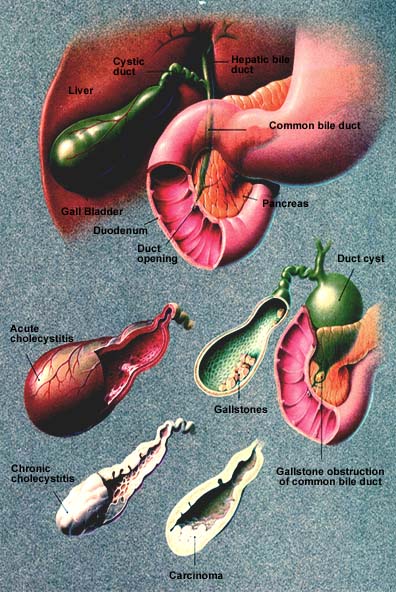
"For Aratus was not only helpful in large undertakings but also more acceptable than anyone else as a companion in the king's leisure hours. Therefore, although Antigonus was young, as soon as he perceived that Aratus was naturally well fitted to be a king's friend, he continually treated him with greater intimacy than anyone else, whether of the Achaeans, or of the Macedonians in his following; 4 and thus the omen proved true which the god had given to Aratus in his sacrificial victims. For it is related that as he was sacrificing a little while before this, a liver was found which had two gall-bladders enclosed in a single coil of fat; whereupon the seer had declared that Aratus would soon enter into close friendship with what he most hated and fought against. At the time, then, Aratus paid no heed to the utterance, since in general he put little faith in victims and divinations, and trusted rather to his reasoning powers. Later, however, when the war was going on well, Antigonus gave a feast in Corinth, at which he had many guests, and made Aratus recline just above himself. After a little while the king called for a coverlet, and asked Aratus if he too did not think it cold; and when Aratus replied that he was very chilly, the king ordered him to come nearer; so that the rug which the servants brought was thrown over both of them together. Then, indeed, Aratus called to mind his sacrificial victims and burst out laughing, and told the king about the omen and the seer's prediction. But this took place at a later time."
...which is just a highfalutin way of saying, "bits I really like in reading Plutarch"
Showing posts with label signs. Show all posts
Tuesday, September 27, 2011
Sunday, September 4, 2011
the birds...
from the Life of Tiberius Gracchus...
"At break of day there came to the house the man who brought the birds with which auspices are taken, and threw food before them. But the birds would not come out of the cage, with the exception of one, though the keeper shook the cage right hard; and even the one that came out would not touch the food, but raised its left wing, stretched out its leg, and then ran back into the cage. This reminded Tiberius of an omen that had happened earlier. 2 He had a helmet which he wore in battle, exceptionally adorned and splendid; into this serpents crawled unnoticed, laid eggs there and hatched them out. For this reason Tiberius was all the more disturbed by the signs from the birds. But nevertheless he set out, on learning that the people were assembled on the Capitol; 3 and before he got out of the house, he stumbled against the threshold. The blow was so severe that the nail of his great toe p187was broken and the blood ran out through his shoe. He had gone but a little way when ravens were seen fighting on the roof of a house to his left hand; and though there were many people, as was natural, passing by, a stone dislodged by one of the ravens fell at the foot of Tiberius himself. This caused even the boldest of his followers to pause; 4 but Blossius of Cumae, who was present, said it would be a shame and a great disgrace if Tiberius, a son of Gracchus, a grandson of Scipio Africanus, and a champion of the Roman people, for fear of a raven should refuse to obey the summons of his fellow citizens; such shameful conduct, moreover, would not be made a mere matter of ridicule by his enemies, but they would decry him to the people as one who was at last giving himself the airs of a tyrant. 5 At the same time also many of his friends on the Capitol came running to Tiberius with urgent appeals to hasten thither, since matters there were going well. And in fact things turned out splendidly for Tiberius at first; as soon as he came into view the crowd raised a friendly shout, and as he came up the hill they gave him a cordial welcome and ranged themselves about him, that no stranger might approach.
18 But after Mucius began once more to summon the tribes to the vote, none of the customary forms could be observed because of the disturbance that arose on the outskirt of the throng, where there was crowding back and forth between the friends of Tiberius and their opponents, who were striving to force their way in and mingle with the rest. Moreover, at this juncture Fulvius Flaccus, a senator, posted himself in a conspicuous place, and since it was impossible to make his voice heard so p189far, indicated with his hand that he wished to tell Tiberius something meant for his ear alone. 2 Tiberius ordered the crowd to part for Flavius, who made his way up to him with difficulty, and told him that at a session of the senate the party of the rich, since they could not prevail upon the consul to do so, were purposing to kill Tiberius themselves, and for this purpose had under arms a multitude of their friends and slaves."
Saturday, August 27, 2011
affair of the vultures...
From the Life of Gaius Marius...
"The affair of the vultures, however, which Alexander of Myndus relates, is certainly wonderful. Two vultures were always seen hovering about the armies of Marius before their victories, and accompanied p509them on their journeys, being recognized by bronze rings on their necks; for the soldiers had caught them, put these rings on, and let them go again; and after this, on recognizing the birds, the soldiers greeted them, and they were glad to see them when they set out upon a march, feeling sure in such cases that they would be successful."
Subscribe to:
Posts (Atom)


