Tuesday, September 27, 2011

the wages of royal friendship...

from the Life of Aratus...

51 But Aratus presently began to withdraw from the court and little by little to retire from his intimacy with Philip. When the king was about to cross into Epeirus and asked him to join the expedition, he refused and remained at home, fearing that he would be covered with ignominy by the king's proceedings. 2 Philip lost his fleet most shamefully at the hands of the Romans, and after utter failure in his undertakings, came back into Peloponnesus. Here he tried once more to hoodwink the Messenians, and after being detected in this, wronged p119them openly and ravaged their territory. Then Aratus was altogether estranged and filled with distrust of the king, being now aware also of the crime committed against his domestic life. At this he was sorely vexed himself, but kept it hidden from his son, 3 who could only know that he had been shamefully abused, seeing that he was not able to avenge himself. For Philip would seem to have undergone a very great and inexplicable change,52 in that from a gentle prince and chaste youth he became a lascivious man and a pernicious tyrant. In fact, however, this was not a change of nature, but a showing forth, in time of security, of a baseness which his fears had long led him to conceal.

52 For that the feelings which he had cherished from the beginning towards Aratus had an admixture of shame and fear, was made plain by what he did to him at the last. For he desired to kill Aratus, and thought he could not be a free man while Aratus lived, much less a tyrant or a king. In a violent way, however, he made no attempt upon him, but ordered Taurion, one of his officers and friends, to do this in a secret way, preferably by poison, when the king was absent. 2 So Taurion made an intimate companion of Aratus, and gave him poison, not of a sharp and violent sort, but one of those which first induce gentle heats in the body, and a dull cough, and then little by little bring on consumption. The thing was not hidden from Aratus, but since it was no use for him to convict the criminal, he calmly and silently drank his cup of suffering to the dregs, as if his sickness had been of a common and familiar type. 3 However, when one of his intimate companions p121who was with him in his chamber saw him spit blood, and expressed surprise, "Such, my dear Cephalo," said Aratus, "are the wages of royal friendship."

trust and gratitude...

from the life of Aratus...

"After this outrageous deed of Philip's, and while he was striving more than ever to set the Messenians by the ears, Aratus reached the city. He showed clearly that he was indignant himself, and would not check his son when he bitterly reproached and reviled Philip. Now, it would seem that the young man was a lover of Philip; and so at this time he told Philip, among other things, that he no longer thought him fair to look upon, after so foul a deed, but the most repulsive of men. 2 Philip made no answer to him, although it was expected that he would, since in his anger he had many times cried out savagely while the young man was speaking, but as though he meekly submitted to what had been said and was a person of moderation and not above the ordinary citizen, he gave the elder Aratus his hand, led him forth from the theatre, and brought him to the Ithomatas,50 in order to sacrifice to Zeus and take a view of the place. 3 For it is quite as well walled in as Acrocorinthus, and with a garrison in it is difficult of access and a hard place for its neighbours to take by force. Thither Philip went up, and offered sacrifice, and when the seer brought him the entrails of the ox, he took them in both hands and showed them to Aratus and Demetrius of Pharos, leaning towards each one in turn and asking them what indications they saw in the omens; was he to be master of the citadel, or to give it back to the Messenians? 4 Demetrius, with a laugh, replied: "If thou hast the spirit of a seer, thou wilt give up the place; but if that of a king, thou wilt hold the ox by both its horns," speaking darkly of Peloponnesus, which, if Philip added the Ithomatas to Acrocorinthus, would be altogether subject and submissive to him. 5 Aratus held his peace for a long time, but upon Philip's asking him to express his opinion, said: "There are many lofty hills in Crete, O Philip, and many towering citadels in Boeotia and Phocis; in Acarnania, too, I suppose, as well inland as on its shores, there are many places which show an amazing strength; but not one of these dost thou occupy, and yet all these peoples gladly do thy bidding. 6 For it is robbers that cling to crags and cliffs, but for a king there is no stronger or more secure defence than trust and gratitude. Relying upon these, young as thou art, thou hast already made thyself leader here, and master there." While he was yet speaking, Philip handed the entrails to the seer, and drawing Aratus to him by the hand, said: "Come hither, then, and let us take the same road," implying that he had been constrained by him and made to give up the city.

livers and gall bladders...

from the Life of Aratus...

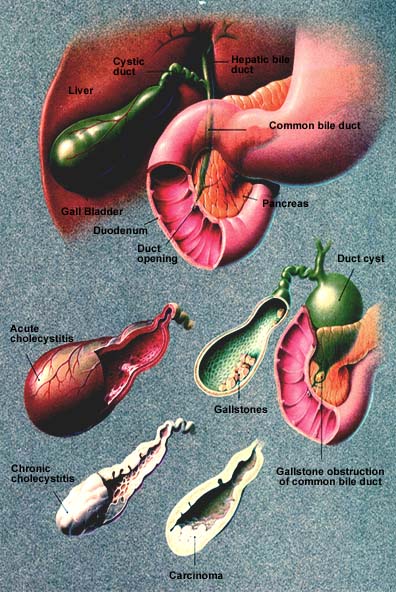
"For Aratus was not only helpful in large undertakings but also more acceptable than anyone else as a companion in the king's leisure hours. Therefore, although Antigonus was young, as soon as he perceived that Aratus was naturally well fitted to be a king's friend, he continually treated him with greater intimacy than anyone else, whether of the Achaeans, or of the Macedonians in his following; 4 and thus the omen proved true which the god had given to Aratus in his sacrificial victims. For it is related that as he was sacrificing a little while before this, a liver was found which had two gall-bladders enclosed in a single coil of fat; whereupon the seer had declared that Aratus would soon enter into close friendship with what he most hated and fought against. At the time, then, Aratus paid no heed to the utterance, since in general he put little faith in victims and divinations, and trusted rather to his reasoning powers.  Later, however, when the war was going on well, Antigonus gave a feast in Corinth, at which he had many guests, and made Aratus recline just above himself. After a little while the king called for a coverlet, and asked Aratus if he too did not think it cold; and when Aratus replied that he was very chilly, the king ordered him to come nearer; so that the rug which the servants brought was thrown over both of them together. Then, indeed, Aratus called to mind his sacrificial victims and burst out laughing, and told the king about the omen and the seer's prediction. But this took place at a later time."

looseness of the bowels...

This from the life of Aratus...

"This success, then, refuted much of the calumny heaped upon Aratus, as well as the scoffing and abusive stories of the flatterers of the tyrants, who would recount, to please their masters, how the general of the Achaeans always had cramps in the bowels when a battle was imminent, and how torpor and dizziness would seize him as soon as the trumpeter stood by to give the signal, and how, after he had drawn up his forces and passed the watchword along, he would ask his lieutenants and captains whether there was any further need of his presence (since the die was already cast), and then go off to await the issue anxiously at a distance. 6 For p69these stories were so prevalent that even in the schools of philosophy, when the query arises whether palpitation of the heart and change of colour and looseness of the bowels, in the presence of seeming peril, are the mark of cowardice, or of some faulty temperament and chilliness in the body, Aratus is always mentioned by name as one who was a good general, but always had these symptoms when a contest was impending."...

31 In the Aetolian war also Aratus won a good repute. For when the Achaeans were bent on an engagement with the Aetolians in front of Megara,20 and Agis the king of the Lacedaemonians was come up with an army and joined in urging the Achaeans on to battle, Aratus opposed this counsel, and in spite of much vilification and much scoffing abuse for weakness and cowardice would not abandon, because of any seeming disgrace, which he judged to be for the general advantage, but allowed the enemy to cross the Geraneian range without a battle and pass on into Peloponnesus. 2 When, however, after thus passing on, they suddenly seized Pellene, he was no longer the same man, nor would he wait at p73all in order that his forces might assemble and come together from all quarters, but at once set out with those he had against the enemy, whom the disorder and wantonness attendant upon their success had wholly weakened.

Blessings

Wednesday, September 21, 2011

steadfast goodwill...

from the life of Aratus... "But there is no safeguard for a ruler like a sincere and steadfast goodwill on the part of the ruled. For when both the common people and the leading men are afraid, not of their leader, but for their leader, he sees with many eyes, hears with many ears, and so perceives betimes what is going on. Therefore I wish to stop my story at this point, in order to describe the life that Aristippus led. This was laid upon him by his office of tyrant, so envied of men, and by the pride and pomp of monarchy, which men celebrate and call blessed."

Friday, September 16, 2011

the love of art...

from the life of Aratus...

"4 After a few days, while still in this helpless plight, Aratus met with a rare piece of good fortune, for a Roman ship put in at the place where he was staying, sometimes on a lookout-place, and sometimes hiding himself. The ship was bound for Syria, but after going on board Aratus persuaded the master of the vessel to convey him as far as Caria. Thither he was conveyed, encountering fresh perils by sea and perils as great as before. 5 From Caria, after a long time, he made his way across to Egypt, and found the king both naturally well disposed towards him, and much gratified p29because Aratus had sent him drawings and paintings from Greece. In these matters Aratus had a refined judgement, and was continually collecting and acquiring works of artistic skill and excellence, especially those of Pamphilus and Melanthus. These he would send to Ptolemy.

13 For the fame of Sicyon's refined and beautiful paintings was still in full bloom, and they alone were thought to have a beauty that was indestructible. Therefore even the great Apelles, when he was already admired, came to Sicyon and gave a talent that he might be admitted into the society of its artists, desiring to share their fame rather than their art. Hence it was that Aratus, although he at once destroyed the other portraits of the tyrants when he had given the city its freedom, deliberated a long time about that of Aristratus (who flourished in the time of Philip of Macedon).9 2 For it was the work of Melanthus and all his pupils, and Aristratus was painted standing by a chariot in which was a Victory; Apelles also had a hand in the painting, as we are told by Polemon the Topographer. And the work was a marvellous one, so that Aratus was moved by the artistic skill therein; but afterwards, such was his hatred of the tyrants, that he ordered it to be removed and destroyed. 3 Accordingly, the painter Nealces, who was a friend of Aratus, interceded with him for the picture, as we are told, and with tears, and when he could not persuade him, said that war should be waged against the tyrants, but not against the treasures of the tyrants. "Let us therefore leave the chariot and the Victory, but Aristratus himself I will undertake to remove from the picture." Aratus p31therefore yielded, and Nealces erased the figure of Aristratus, and in its place painted a palm-tree merely, not daring to introduce anything else. We are told, however, that the feet of the erased figure of Aristratus were left by an oversight beneath the chariot.

4 In consequence of this love of art Aratus was already beloved by the king, and in personal intercourse grew yet more upon him, and received for his city a gift of a hundred and fifty talents. Forty of these Aratus took with him at once and sailed to Peloponnesus; the rest the king divided into instalments, and sent them to him afterwards one by one."

Thursday, September 15, 2011

by natural bent...

from the Life of Aratus...

"Aratus was by natural bent a statesman, high-minded, more exact in his public than in his private relations, a bitter hater of tyrants, and ever making a regard for the public weal determine his enmity or his friendship. 2 Wherefore he seems to have proved not so much a strict friend, as a considerate and mild enemy, changing his ground in either direction according to the exigencies of the state, loving concord between nations, community of cities, and unanimity of council and assembly, beyond all other blessings. It was manifest that he resorted to open warfare and strife without courage and with little confidence, but that in stealing advantages and secretly managing cities and tyrants he was most proficient. 3 Therefore, though he won many unexpected successes where he showed courage, he seems to have lost no fewer favourable opportunities through p25over-caution. For not only in the case of certain wild beasts, as it would seem, is the vision strong by night but wholly blinded in the day-time (since the humour in their eyes is too dry and delicate to bear contact with the light), but there is also in some men a cleverness and sagacity which is prone to be confounded in transactions that are carried out under the open sky and proclaimed abroad by public criers, but when confronting hidden and secret enterprises recovers its courage. 4 Such unevenness a lack of philosophy may cause in men of good natural parts; they produce virtue without scientific knowledge, and it is like spontaneous and uncultivated fruit. This can be proved by examples."