Showing posts with label method. Show all posts

Thursday, September 15, 2011

lover of himself...

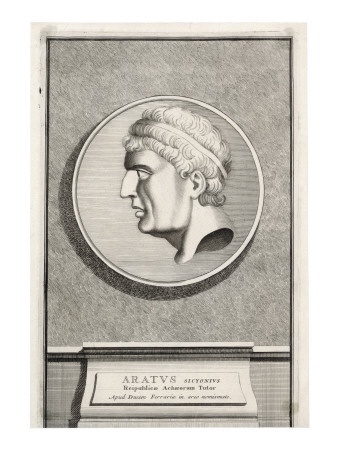
from the life of Aratus...

"1 There is an ancient proverb, Polycrates,1 which the philosopher Chrysippus puts not as it really is, but as he thought better:—

"Who will praise a father, except happy sons?"
But Dionysodorus of Troezen corrects him, and restores the true form thus:

"Who will praise a father, except unhappy sons?"
2 And he says that the proverb stops the mouths of those who, being worthless in themselves, take refuge in the virtues of certain ancestors and are forever praising them. But surely for a man in whom, to use Pindar's words, "the noble spirit naturally displayesÂș itself as inherited from sires," and who, like thee, patterns his life after the fairest examples in his family line, — for such men it will be good fortune to be reminded of their noblest progenitors, ever and anon hearing the story of them, or telling it themselves. 3 For it is not that they lack p5noble qualities of their own and make their reputation dependent on their praises of others, nay rather, they associate their own careers with the careers of their great ancestors, whom they hail both as founders of their line and as directors of their lives. And therefore, now that I have written the life of Aratus, who was thy countryman and forefather, and to whom thou thyself art no discredit in either reputation or influence, I send it to thee, not as though thou hadst not been at pains from the beginning to have the most precise knowledge of thy great ancestor's career, 4 but in order that thy sons Polycrates and Pythocles may be reared, now by hearing and now by reading, after examples found in their own family line — examples which it well becomes them to imitate. For it is the lover of himself, and not the lover of goodness, who thinks himself always superior to others."

Thursday, August 18, 2011

The good the bad and the ugly...

From the Life of Demetrius...

"Those who first assumed that the arts are like the bodily senses, seem to me to have perceived very clearly the power of making distinctions which both possess, by which power we are enabled to apprehend opposites, as well in one case as in the other. For the arts and the senses have this power in common; though in the use to which we put the distinctions made, they differ. 2 For our sense-perception has no greater facility in distinguishing white objects than black, or sweet things than bitter, or soft and yielding substances than hard and resisting ones, but its function is to receive impressions from all objects alike, and having received them, to report the resulting sensation to the understanding. The arts, on the other hand, which proceed by the use of reason to the selection and adoption of what is appropriate, and to the avoidance and rejection what is alien to themselves, contemplate the one class of objects with direct intent and by preference, and yet incidentally contemplate the other class also, and in order to avoid them. 3 For instance, the art of healing has incidentally studied the nature of disease, and the art of harmony the nature of discord, in order to produce their opposites; and the most consummate arts of all, namely, temperance, justice, and wisdom, since their function is to distinguish, not only what is good and just p5and expedient, 889but also what is bad and unjust and disgraceful, have no praises for a guilelessness which plumes itself on its inexperience of evil, nay, they consider it to be foolishness, and ignorance of what ought especially to be known by men who would live aright. 4 Accordingly, the ancient Spartans would put compulsion on their helots at the festivals to drink much unmixed wine, and would then bring them into the public messes, in order to show their young men what it was like to be drunk. And though I do not think that the perverting of some to secure the setting right of others is very humane, or a good civil policy, 5 still, when men have led reckless lives, and have become conspicuous, in the exercise of power or in great undertakings, for badness, perhaps it will not be much amiss for me to introduce a pair or two of them into my biographies, though not that I may merely divert and amuse my readers by giving variety to my writing. 6 Ismenias the Theban used to exhibit both good and bad players to his pupils on the flute and say, you must play like this one," or again, "you must not play like this one"; and Antigenidas used to think that young men would listen with more pleasure to good flute-players if they were given an experience of bad ones also. So, I think, we also shall be more eager to observe and imitate the better lives if we are not left without narratives of the blameworthy and the bad."

Monday, August 8, 2011

I am writing lives...


"1 It is the life of Alexander the king, and of Caesar, who overthrew Pompey, that I am writing in this book, and the multitude of the deeds to be treated is so great that I shall make no other preface than to entreat my readers, in case I do not tell of all the famous actions of these men, nor even speak exhaustively at all in each particular case, but in epitome for the most part, not to complain. 2 For it is not Histories that I am writing, but Lives; and in the most illustrious deeds there is not always a manifestation of virtue or vice, 665nay, a slight thing like a phrase or a jest often makes a greater revelation of character than battles when thousands fall, or the greatest armaments, or sieges of cities. 3 Accordingly, just as painters get the likenesses in their portraits from the face and the expression of the eyes, wherein the character shows itself, but make very little account of the other parts of the body, so I must be permitted to devote myself rather to the signs of the soul in men, and by means of these to portray the life of each, leaving to others the description of their great contests."

Tuesday, July 26, 2011

history as a mirror...

From the Life of Timoleon, this on why Plutarch writes the "Lives"...

"I began the writing of my "Lives" for the sake of others, but I find that I am continuing the work and delighting in it now for my own sake also, using history as a mirror and endeavouring in a manner to fashion and adorn my life in conformity with the virtues therein depicted. For the result is like nothing else than daily living and associating together, when I receive and welcome each subject of my history in turn as my guest, so to speak, and observe carefully "how large he was and of what mien," and select from his career what is most important and most beautiful to know.

"And oh! what greater joy than this canst thou obtain,"

and more efficacious for moral improvement? Democritus says we ought to pray that we may be visited by phantoms which are propitious, and that from out the circumambient air such only may encounter us as are agreeable to our natures and good, rather than those which are perverse and bad, thereby intruding into philosophy a doctrine which is not true, and which leads astray into boundless superstitions. But in my own case, the study of history and the familiarity with it which my writing produces, enables me, since I always cherish in my soul the records of the noblest and most estimable characters, to repel and put far from me whatever base, malicious, or ignoble suggestion my enforced associations may intrude upon me, calmly and dispassionately turning my thoughts away from them to the fairest of my examples. Among these were Timoleon the Corinthian and Aemilius Paulus, whose Lives I have now undertaken to lay before my readers; the men were alike not only in the good principles which they adopted, but also in the good fortune which they enjoyed in their conduct of affairs, and they will make it hard for my readers to decide whether the greatest of their successful achievements were due to their good fortune or their wisdom."

Tuesday, June 21, 2011

set towards virtue...

This on the goal of the "Parallel Lives" in the life of "Cimon"

"... and since we believe that a portrait which reveals character and disposition is far more beautiful than one which merely copies form and feature, we shall incorporate this man's deeds into our parallel lives, andÂș we shall rehearse them truly. The mere mention of them is sufficient favour to show him; and as a return for his truthful testimony he himself surely would not deign to accept a false and garbled narrative of his career.

We demand of those who would paint fair and graceful features that, in case of any slight imperfection therein, they shall neither wholly omit it nor yet emphasise it, because the one course makes the portrait ugly and the other unlike its original. In 1like manner, since it is difficult, nay rather perhaps impossible, to represent a man's life as stainless and pure, in its fair chapters we must round out the truth into fullest semblance; but those transgressions and follies by which, owing to passion, perhaps, or political compulsion, a man's career is sullied, we must regard rather as shortcomings in some particular excellence than as the vile products of positive baseness, and we must not all too zealously delineate them in our history, and superfluously too, but treat them as though we were tenderly defending human nature for producing no character which is absolutely good and indisputably set towards virtue."