Showing posts with label family. Show all posts

Thursday, September 15, 2011

lover of himself...

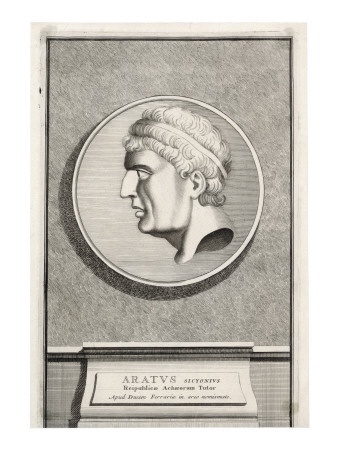
from the life of Aratus...

"1 There is an ancient proverb, Polycrates,1 which the philosopher Chrysippus puts not as it really is, but as he thought better:—

"Who will praise a father, except happy sons?"
But Dionysodorus of Troezen corrects him, and restores the true form thus:

"Who will praise a father, except unhappy sons?"
2 And he says that the proverb stops the mouths of those who, being worthless in themselves, take refuge in the virtues of certain ancestors and are forever praising them. But surely for a man in whom, to use Pindar's words, "the noble spirit naturally displayesÂș itself as inherited from sires," and who, like thee, patterns his life after the fairest examples in his family line, — for such men it will be good fortune to be reminded of their noblest progenitors, ever and anon hearing the story of them, or telling it themselves. 3 For it is not that they lack p5noble qualities of their own and make their reputation dependent on their praises of others, nay rather, they associate their own careers with the careers of their great ancestors, whom they hail both as founders of their line and as directors of their lives. And therefore, now that I have written the life of Aratus, who was thy countryman and forefather, and to whom thou thyself art no discredit in either reputation or influence, I send it to thee, not as though thou hadst not been at pains from the beginning to have the most precise knowledge of thy great ancestor's career, 4 but in order that thy sons Polycrates and Pythocles may be reared, now by hearing and now by reading, after examples found in their own family line — examples which it well becomes them to imitate. For it is the lover of himself, and not the lover of goodness, who thinks himself always superior to others."

fortune and virtue...

from the life of Caius Gracchus (on the Mother of Tiberius and Gaius...)

"An further, Cornelia is said to have borne all her misfortunes in a noble and magnanimous spirit, and to have said of the sacred places where her sons had been slain that they were tombs worthy of the dead which occupied them. She resided on the promontory called Misenum, and made no change in her customary way of living. 2 She had many friends, and kept a good table that she might show hospitality, for she always had Greeks and other literary men about her, and all the reigning kings interchanged gifts with her. She was indeed very agreeable to her visitors and associates when she discoursed to them about the life and habits of her father Africanus, but most admirable when she spoke of her sons without grief or tears, and narrated their achievements and their fate to all enquirers as if she were speaking of men of the early days of Rome. 3 Some were therefore led to think that old age or the greatness of her sorrows had impaired her mind and made her insensible to her misfortunes, whereas, really, such persons themselves were insensible how much help in the banishment of grief mankind derives from a noble nature and from honourable birth and rearing, as well as of the fact that while fortune often prevails over virtue when it endeavours to ward off evils, she cannot rob virtue of the power to endure those evils with calm assurance."

Sunday, September 4, 2011

he was not going to remain quiet...

from the Life of Caius Gracchus...

"Caius Gracchus, at first, either because he feared his enemies, or because he wished to bring odium upon them, withdrew from the forum and lived quietly by himself, like one who was humbled for the present and for the future intended to live the same inactive life, so that some were actually led to denounce him for disliking and repudiating his brother's political measures. 2 And he was also quite a stripling, for he was nine years younger than his brother, and Tiberius was not yet thirty when he died. But as time went on he gradually showed a disposition that was averse to idleness, effeminacy, wine-bibbing, and money-making; and by preparing his oratory to waft him as on swift pinions to public life, he made it clear that he was not going to remain quiet; 3 and in defending Vettius, a friend of his who was under prosecution, he had the people about him inspired and frantic with sympathetic delight, and made the other orators appear to be no better than children. Once more, therefore, the nobles began to be alarmed, and there was much talk among them about not permitting Caius to be made tribune.

4 By accident, however, it happened that the lot fell on him to go to Sardinia as quaestor for Orestes the consul.1 This gave pleasure to his enemies, and did not annoy Caius. For he was fond of war, and quite as well trained for military service as for pleading in the courts. Moreover, he still shrank from public life and the rostra, but was unable to resist the calls to this career which came from the people and his friends. He was therefore altogether satisfied with this opportunity of leaving the city. 5 And yet a strong opinion prevails that he was a demagogue pure and simple, and far more eager than Tiberius to win the favour of the multitude. But this is not the truth; nay, it would appear that he was led by a certain necessity rather than by his own choice to engage in public matters. 6 And Cicero the orator also relates2 that Caius declined all office and had chosen to live a quiet life, but that his brother appeared to him in a dream and addressed him, saying: "Why, pray, dost p201thou hesitate, Caius? There is no escape; one life is fated for us both, and one death as champions of the people."

Sunday, August 28, 2011

this frail body...

From the Life of Cleomenes...

"Such was the result of his expedition, and he was leading his army home, when, as it was already evening and he was near Tegea, messengers from Sparta came with tidings of a fresh and even greater calamity, the death of his wife. It was because of her that even in his most successful campaigns he could not endure to the end, but would p99continually be coming home to Sparta, out of love for Agiatis and in supreme devotion to her. 2 Of course, then, he was smitten with grief, as was natural for a young man who had lost a most beautiful and most sensible wife, but he did not allow his suffering to shame or betray the loftiness of his thought or the greatness of his spirit. He maintained his usual speech, dress, and bearing, 815gave the customary orders to his captains, and took thought for the safety of Tegea. 3 Next morning he returned to Sparta, and after duly mourning his loss with his mother and children at home, he at once engaged in the measures which he planned for the public good.

Now, Ptolemy the king of Egypt promised him aid and assistance, but demanded his mother and his children as hostages. For a long time, therefore, he was ashamed to tell his mother, and though he often went to her and was at the very point of letting her know, he held his peace, so that she on her part became suspicious and enquired of his friends whether there was not something which he wished to impart to her but hesitated to do so. 4 Finally, when Cleomenes plucked up courage to speak of the matter, his mother burst into a hearty laugh and said: "Was this the thing which thou wast often of a mind to tell me but lost thy courage? Make haste, put me on board a vessel, and send this frail body wheresoever though thinkest it will be of most use to Sparta, before old age destroys it sitting idly here."

Saturday, June 18, 2011

a good husband...

From Plutarch's life of Cato Major...

"He was...a good father, considerate husband, and a household manager of no mean talent, nor did he give only a fitful attention to this, as a matter of little or no importance...he thought it more praiseworthy to be a good husband than a good senator..."

Friday, June 10, 2011

men and money...


from the "Life" of Themistocles...

"Of two suitors for his daughter's hand, he chose the likely man in preference to the rich man, saying that he wanted a man without money rather than money without a man."